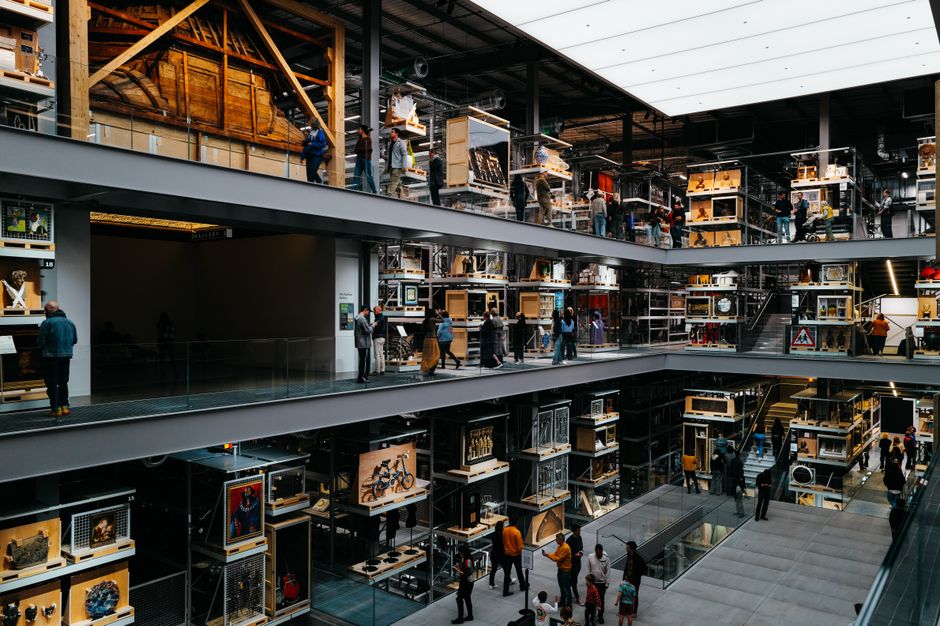
Walk down Ligovsky Prospekt on any Friday night and you'll find warehouse spaces buzzing with experimental theatre, projection art bleeding across Soviet-era brick facades, and crowds spilling onto sidewalks for impromptu performances. These aren't sanctioned events. They're the visible core of a sprawling movement that has reshuffled St Petersburg's cultural landscape over the past eighteen months.
The shift reflects a deeper fracture. For years, the Mariinsky Theatre, the Hermitage, and the State Russian Museum controlled what counted as legitimate culture in the city. Young creators—many now in their twenties and thirties—have grown impatient with application deadlines, submission fees, and programming decisions they say prioritise tradition over experimentation. Instead, they've built their own infrastructure: underground networks of galleries, artist collectives, and performance spaces that operate with minimal overhead and maximum autonomy.
The Pushka Collective, based in a converted printing factory in the Spasskaya Sloboda neighbourhood, exemplifies this shift. Founded in 2024 by seven visual artists and a sound designer, it now hosts weekly installations, video screenings, and what members call "structured chaos"—events that blur boundaries between audience and performer. Across the city in the Vyborg Side, another group called Zona operates out of a three-storey former Soviet administrative building on Borovaya Street. Since launching last autumn with a photography exhibition, Zona has hosted over forty events, averaging 150 visitors per gathering. Neither venue charges admission. Both survive on donations and the unpaid labour of their members.
Momentum Built on Frustration and Connectivity
Evgeny Sokolov, an independent curator who documents St Petersburg's experimental scene on his Telegram channel—which has grown to 18,400 subscribers in six months—attributes the movement to two colliding forces: digital connectivity and institutional exhaustion. "Young people here aren't isolated anymore," he said in an interview. "They see what's happening in Berlin, in Budapest, in cities where alternative spaces are thriving. They also see our main institutions as stuck. The Mariinsky spends enormous sums staging technically perfect productions of Swan Lake for the hundredth time. Meanwhile, theatre students graduate with radical ideas and nowhere to test them."
The numbers suggest real momentum. An informal survey conducted by the independent arts publication Kray last spring found approximately forty-five active underground venues across St Petersburg, up from roughly twelve in 2023. Monthly attendance at these spaces reached an estimated 8,000 people in April 2026. By comparison, the Hermitage draws around 4,000 daily visitors, but those visitors encounter carefully curated collections in designated galleries. The underground scene operates without such curation—chaotic, uneven, but undeniably alive.
Location matters enormously. Venues cluster in two zones: the industrial edges of the Vyborg Side and the aging Soviet blocks around Ligovsky Prospekt. Both neighbourhoods have cheap rent, indifferent landlords, and populations accustomed to informal activity. A warehouse studio space that might command $800 monthly in central districts runs $200–300 in these areas. That arithmetic has enabled survival.
What Comes Next for St Petersburg's Fractured Scene
The movement faces genuine pressure. City authorities have begun enforcing noise ordinances in residential areas. Several venues have received warnings for lacking proper permits. Pushka Collective was temporarily shuttered in March after an inspection—though it reopened within weeks. The precarity is built in.
What happens next depends partly on whether established institutions adapt. The State Russian Museum has recently begun hosting talks by younger curators and opened an "emerging artists" purchasing programme with a modest 5 million ruble budget. The Mariinsky, however, shows few signs of strategic openness.
For now, the underground persists. Zona will host an expanded summer festival starting July 15. Pushka announced a residency programme accepting twenty artists for six-month fellowships at zero cost to participants. These aren't marginal activities anymore—they're the actual centre of where St Petersburg's cultural energy lives.